Hybrid Work vs Remote Work: Key Differences, Benefits, Challenges & Which Is Best in 2026?
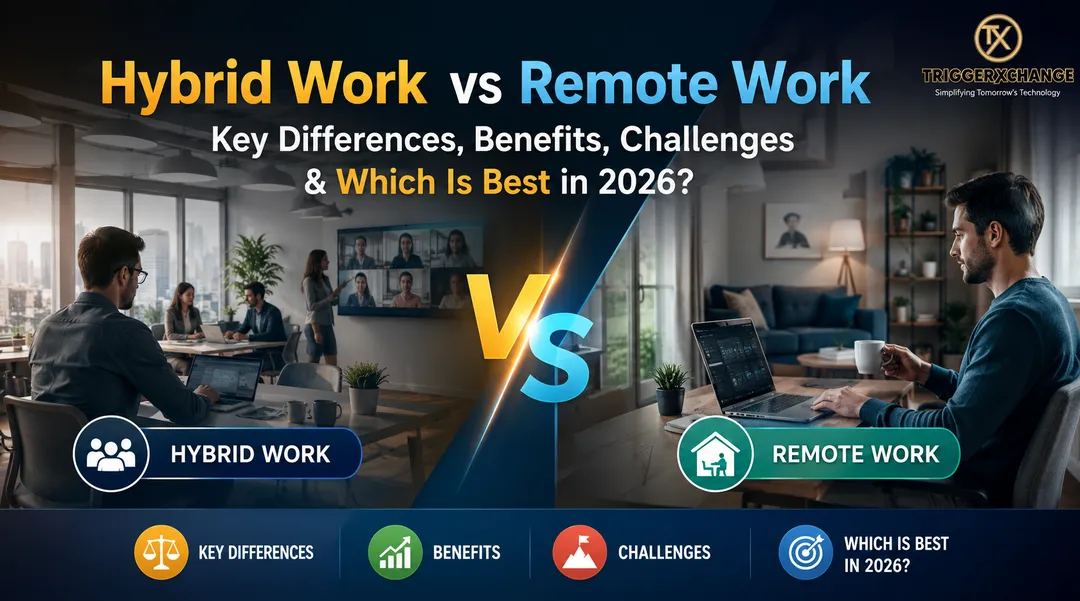
Remote work eliminates the commute and offers total location independence, allowing employees to work entirely from home or anywhere globally. Hybrid work blends the two, requiring employees to be in the physical office for specific tasks or set days (usually 2 to 3 days a week) while spending the rest of the week working remotely.
What is Remote and Hybrid Work?
Many professionals searching for what is remote and hybrid work are looking to understand how these modern work arrangements function.
Remote work model in which employees complete their tasks completely without a conventional workplace. They can work at a home office, a co-working space, a café or anywhere they can get a good internet connection. Communication and collaboration occur mainly by using digital tools, video conferencing and cloud-based software.
Hybrid work is when it is flexible and includes both working from home and from the office. Staff share their time between home and office-based work. They might have set days for coming into the office or may be able to come in any day that suits the company’s needs.
As working from home and remote work become more prevalent, knowing the remote and hybrid work meaning helps businesses choose the appropriate strategy given their staff needs, culture, and business objectives.
Difference Between Remote and Hybrid Work
One of the most common questions employers and employees ask is about the difference between remote and hybrid work.
The difference is in the work attendance. Remote employees work completely outside of the office, and hybrid employees work a combination of in the office and remote. While remote work emphasizes location independence and autonomy, hybrid work is flexible and emphasizes in-person collaboration.
Hybrid models are more popular for organizations that depend heavily on teams and face-to-face interactions, or in companies that have digital-centric operations.
Hybrid Work vs Remote Work: Key Differences
Office Presence
- Hybrid Work: Employees are required to visit the office occasionally for meetings, collaboration, or specific work requirements.
- Remote Work: Employees work entirely outside the office and are not required to be physically present.
Flexibility
- Hybrid Work: Offers moderate to high flexibility, allowing employees to split their time between home and the office.
- Remote Work: Provides very high flexibility, enabling employees to work from virtually any location.
Face-to-Face Collaboration
- Hybrid Work: Encourages frequent in-person interactions and team collaboration.
- Remote Work: Relies primarily on virtual communication, resulting in limited face-to-face collaboration.
Commute
- Hybrid Work: Employees commute to the office on designated workdays.
- Remote Work: Eliminates daily commuting, saving both time and travel expenses.
Talent Pool
- Hybrid Work: Businesses typically recruit talent from regional or national locations.
- Remote Work: Organizations can hire professionals from anywhere in the world, expanding their talent pool significantly.
Office Costs
- Hybrid Work: Reduces office expenses but still requires physical workspace and facilities.
- Remote Work: Minimizes office-related costs as employees work remotely.
Work-Life Balance
- Hybrid Work: Provides a balanced approach by combining workplace interaction with remote flexibility.
- Remote Work: Offers greater flexibility, allowing employees to customize their work schedules and environment.
Team Bonding
- Hybrid Work: Makes it easier to build and maintain team relationships through regular in-person interactions.
- Remote Work: Requires intentional efforts such as virtual team-building activities and regular communication to maintain strong team connections.
The advantages of Hybrid Work are:
Improved balance between flexibility and collaboration.
Hybrid work gives workers the flexibility to work from home, but still have the option to actively participate in in-person discussions, meetings, and brainstorming sessions.
Stronger Workplace Culture
In-person communication fosters deeper connections among people and adds to a more connected and cohesive company culture.
Reduced Employee Burnout
Teachers may swap between the home and business setting, assisting them to handle their own and professional duties better.
Improved Productivity
Hybrid workers have the flexibility to work in the most appropriate space for the job. There is the possibility of working in the office together for collaborative projects and at home for focused work.
Enhanced Employee Satisfaction
Flextime can help improve employee engagement, satisfaction, and retention.
The difficulties of hybrid working. The challenges of hybrid working.
There are pros and cons with hybrid work, but some potential problems for companies:
- Coordinating employee schedules
- Making sure that remote and in-office employees have equal opportunities
- Communications across several sites
- Ensuring consistency in team working
- Purchasing technology to enable hybrid working.Technology investment for hybrid working.
Despite the obstacles, many companies find hybrid working to be a viable, long-term solution.
The advantages of working remotely.
Maximum Flexibility
With remote working, staff can work from anywhere, providing them with the flexibility of and autonomy over their work environments and schedules.
No Daily Commute
Eliminating commuting each day will save employees time and transportation dollars, and provide a better work/life balance.
Having access to a wider talent pool.
Having the opportunity to hire skilled professionals no matter where they are in the world, expanding your hiring opportunities.
Lower Business Expenses
Telework decreases office space, utility, maintenance and work site expenses.
More focused and independent work. More focused and independent work.
There are fewer interruptions in work and employees are able to design their own work environment, which improves focus and efficiency.
Challenges of Remote Work
While remote work has its benefits of flexibility, it presents some challenges as well:
- Reduced face-to-face interaction
- Risk of feelings of isolation
- Diffusion of efforts, failure to communicate and failure to collaborate
- Facing difficulties to keep the company culture.
- Relying on technology and Internet connection
- Problem with the distinction between work and personal life.
There are some challenges that can be addressed with effective communication and employee engagement.
Which Is More Productive: Hybrid or Remote Work?
When it comes to hybrid vs remote work productivity, there are a host of factors that impact productivity, including job role, company culture, employee preferences, and business objectives.
Hybrid working can help to foster better engagement, creativity and collaboration with teams by having regular in-person meetings. Conversely, remote is a strategy that can help employees with independent work become more focused and efficient.
Good organisations don’t just pay attention to where they are, but they also look at what they achieve, how they do it and how their staff feel during the process.
What kind of model is better for businesses?
Hybrid Work May Be Best For:
- Businesses that require regular collaboration
- Client-facing organizations
- Teams that are being mentored in-person
- Companies that focus on developing Business Culture
Remote Work May Be Best For:
- Digital-first businesses
- Distributed teams
- Groups looking to cut costs on their operations.
- Businesses that recruit from across the country.
It’s a decision that will be down to business objectives and staff needs.
Future of work in 2026
The workplace of the future will be very flexible. Organizations remain moving towards the hybrid approach and are promoting remote working. Employees are becoming more flexible and companies with a flexible work environment are becoming more competitive in attracting and retaining high quality employees.
In the future, technology, collaboration tools and flexible workspace solutions will remain the driving forces behind the way an organization works.
Conclusion
Comprehending the remote and hybrid work meaning has become essential for companies adapting to the new workplace environment. The difference between remote and hybrid work is fundamentally about how often people go to the office and how they work together, but there are benefits to both types of work arrangements.
Deciding on a hybrid vs remote workforce should be based on business objectives, team culture and employee needs. With the right tools and systems in place, and a flexible spirit, organizations can create effective, engaged, productive teams.
Looking for a Flexible Workspace Solution?
Whether you opt for a hybrid work environment or require a professional space away from your home office, selecting the right workspace can make a notable impact on your team’s productivity and cooperation.
When looking for the cheapest coworking space in Navi Mumbai, TriggerXchange provides flexible and affordable workspace and virtual office solutions for startups, freelancers, remote professionals, and growing businesses. All the benefits of a professional workspace, no matter what they are, can be utilized without the cost of a traditional office, including modern facilities, high-speed Internet, meeting rooms, collaborative spaces, and a professional business address through a virtual office.
Make use of flexible workspace solutions now and learn more about how a cost-effective coworking space and virtual office can boost your business growth and success.